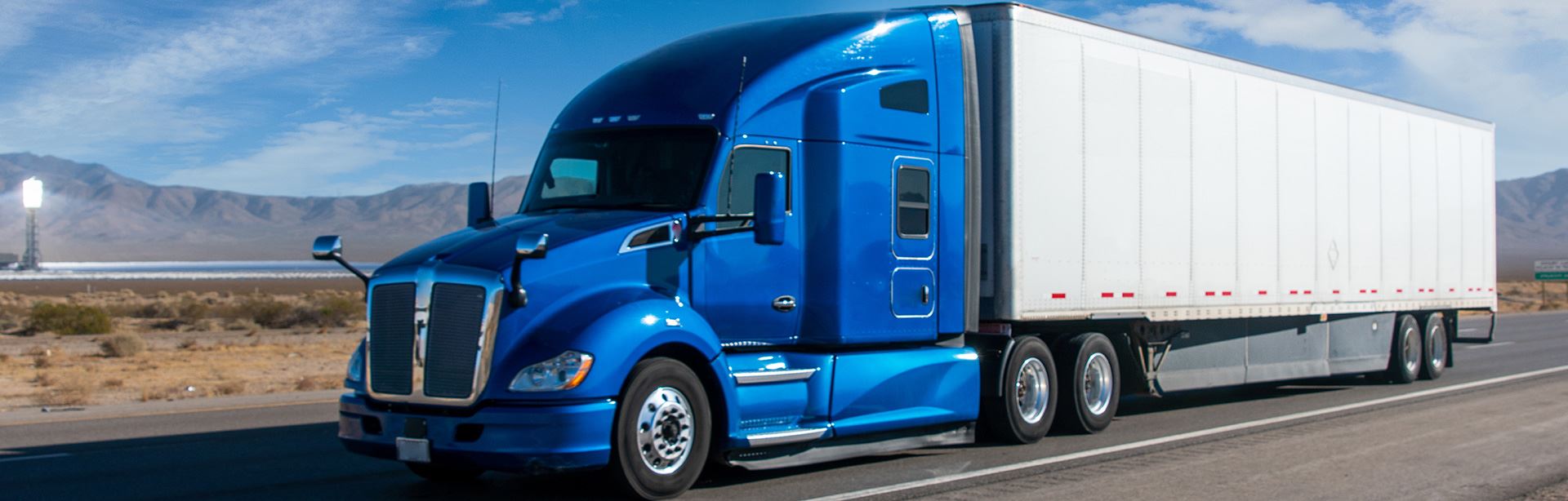
Commercial drivers crossing Donner Pass know that a trip can change quickly when a roadside inspection leads to an Out-of-Service (OOS) order or maintenance violation.
A routine roadside inspection at the Truckee CVEF on I-80 may uncover a small maintenance issue that could have been corrected before leaving the yard.
Using a DVIR for commercial vehicles before every trip or trip continuation helps reduce those surprises and keeps both the driver and the fleet moving.
A traffic ticket or inspection violation can affect much more than the commercial driver's schedule. Careful preparation and preventive maintenance before each trip help commercial drivers avoid unnecessary delays, CSA points, and costly roadside repairs.
Why a DVIR for Commercial Vehicles Matters During Roadside Inspections
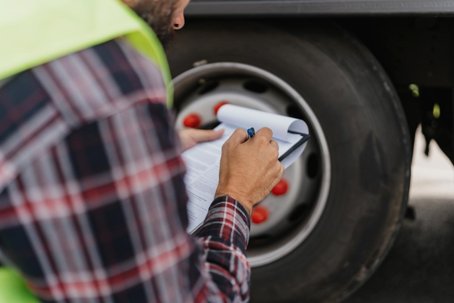
A Driver Vehicle Inspection Report (DVIR) is much more than paperwork.
It provides commercial drivers with a structured method for checking the condition of the CMV before beginning a trip or continuing after an off-duty period.
The DVIR is a required inspection item that commercial drivers must maintain and provide during roadside inspections.
A thorough inspection before leaving can identify problems before the CHP discover them—especially since the new CSA and SMS safety compliance and enforcement program methodology splits vehicle maintenance into two categories.
The new system includes “Driver Observed” maintenance issues that make annotating these maintenance issues on the DVIR before and during a trip more important than under the old system. When a driver identifies a maintenance issue they could not fix “on the road,” it might not count as a violation.
For example, a star on the windshield is a violation, but if the driver annotated it on the DVIR, it might not be a violation.
The FMCSA now uses updated thresholds that could trigger warnings, roadside inspection violations, or carrier headquarters audits.
Although every vehicle deserves a complete inspection, drivers should pay particular attention to:
- Headlights, brake lights, turn signals, clearance lights, and reflectors.
- Tire condition, tread depth, and inflation pressure.
- Brake components and overall braking performance.
- Windshields and windows for cracks or expanding "stars."
- Mud flaps and splash guards where required.
- Mirrors and other required safety equipment.
Small problems discovered during a pre-trip inspection are usually much easier—and less expensive—to correct than violations discovered during a roadside inspection.
Preventive Maintenance Helps Avoid Expensive Delays
Preventive maintenance benefits everyone involved in commercial transportation.
Scheduled inspections often uncover worn parts before they become expensive roadside repairs or safety issues.
Whether maintenance is based on mileage, engine hours, or a regular service schedule, consistency helps extend equipment life and reduce unexpected downtime.
Routine maintenance may also improve fuel economy. Properly inflated tires, regular tune-ups, and timely tire rotation often reduce operating costs while keeping trucks safely on the road.
Overweight Trucks and Out-of-Service Orders Can Delay or Stop a Trip
Commercial drivers traveling I-80 through Donner Pass are frequently pulled into the Truckee Commercial Vehicle Inspection & Enforcement Facility (CVEF), where inspectors may evaluate vehicle weight as well as mechanical condition.
An overweight truck may receive a citation and may not continue until excess weight has been removed or redistributed. Likewise, significant mechanical defects—particularly brake violations—can result in an Out-of-Service (OOS) Order until repairs are completed.
Under the new FMCSA system, OOS orders, serious offenses, and major offenses are assessed two CSA points, while other violations receive one. These points affect both the commercial driver and the carrier.
When commercial vehicles remain parked awaiting repairs, nobody benefits. The driver is not earning miles, deliveries are delayed, and the fleet loses valuable revenue.
Traffic Tickets, CSA Points, and Fleet Profitability
Many commercial drivers focus only on the immediate fine after receiving a traffic ticket. Unfortunately, the long-term consequences often have a greater financial impact—especially if the FMCSA is notified.
Traffic ticket convictions, roadside inspection violations, and CSA points can increase a carrier's Safety Measurement System (SMS) percentile. Fleets with an SMS percentile above 65 are more likely to receive additional roadside inspections, creating further delays and operating costs.
Keeping CSA points to a minimum often makes fleets more profitable. Using a DVIR for commercial vehicles, maintaining equipment properly, avoiding overweight loads, and challenging appropriate citations all contribute to safer operations and lower operating expenses.
Ask a CDL Traffic Attorney About a DVIR for Commercial Vehicles Violation
I-80 through Donner Pass is one of California's busiest freight corridors, carrying commercial traffic between eastern states and the Port of Oakland every day. Because of that heavy truck traffic, roadside inspections at the Truckee CVEF are a routine part of commercial driving.
If a commercial driver receives a traffic ticket or inspection violation involving a DVIR for commercial vehicles, the driver should discuss the situation before paying the fine when the matter could be resolved in Truckee Traffic Court.
At Bigger & Harman, APC, we regularly help commercial drivers resolve traffic tickets and roadside inspection violations arising from Truckee CVEF inspections. We carefully review each case, explain the available options, and work toward the best possible outcome supported by the facts.
Call Bigger & Harman, APC, at (661) 349-9300 for a free consultation. Se habla Español. Para Español, marque 859-1177. We also assist Punjabi-speaking commercial drivers.
Commercial drivers may also email attorney@biggerharmanlaw.com or use our secure website contact form.
Download our e-book, Protecting Your Commercial Driver License.
❓ Frequently Asked Questions (FAQ) Section
Q: Why should commercial drivers complete a DVIR before every trip?
A: A DVIR for commercial vehicles helps identify maintenance concerns before they become safety issues, roadside inspection violations, CSA points, or expensive repairs. Under the FMCSA’s new methodology, “driver observed” issues might not count as a violation during a roadside inspection.
Q: Which items do inspectors commonly examine during roadside inspections at Truckee CVEF?
A: Commonly observed violations during roadside inspections often involve brakes, tires, lights, reflectors, windshields, logbooks, vehicle weight, and other required safety equipment.
Q: Will I have to appear in Truckee Traffic Court to dispute a violation?
A: Not necessarily. In many cases, Bigger & Harman can appear on the commercial driver's behalf, allowing the driver to remain on the road while the violations are resolved.
References:
The DOT FMCSA 49 CFR Part 383.51, Paragraph 6.2.5, Disqualification of Drivers.
The CA DMV DL 650, California Commercial Driver Handbook. Section 11: Vehicle Inspection Test.