
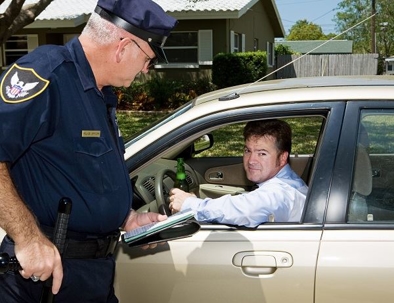
Holding a fresh traffic ticket from a Bakersfield officer, many drivers feel the same thing: frustration, a little panic, and the sense that the judge will automatically believe the officer, no matter what they say. On top of that, there is the worry about how much the ticket will cost, whether it will put points on the license, and what that might do to insurance rates or even a job. It can feel like a situation that is already decided against you.
Most people in Kern County do not realize that what they do in the days and weeks after getting that ticket can change how the case looks in court. Traffic court in Bakersfield runs quickly, and the judge does not have time to investigate the scene or dig into records. The evidence you bring, and how you organize and present it, often affects whether the judge simply accepts the officer’s version or takes a harder look at the details.
At Bigger & Harman, APC, we have spent more than a decade handling traffic tickets in Bakersfield and throughout Kern County. Day after day, we see which photos, records, and witness statements judges actually pay attention to and which ones they ignore. In this guide, we share how we think about traffic ticket evidence in Bakersfield so you can start building a stronger defense for your own case and know when it makes sense to have us step in and take the lead.
Why Evidence Matters So Much For A Bakersfield Traffic Ticket
Many drivers walk into Bakersfield traffic court thinking the hearing is just a formality. They assume that if the officer shows up, the judge will simply side with the officer and that there is nothing they can do except tell their side and hope for mercy. In reality, the officer’s testimony is evidence, but it is not the only evidence the judge can consider. Your testimony, your photos, your records, and your witnesses are evidence too, and they can create reasonable doubt or support a reduction in charges.
In a California traffic case, the government must prove that you violated a specific section of the California Vehicle Code. For a speeding ticket, that means proving your speed and the posted limit. For a red light ticket, that means proving you entered the intersection after the light changed. Judges in Bakersfield usually rely on the officer’s observations or device readings to reach that conclusion. When you bring clear, organized evidence that shows the sign was blocked, the lane markings were confusing, or the officer’s view was limited, you give the judge something solid to weigh against the officer’s version.
Those details matter because they tie directly to points and money. Most moving violations in California carry one point, and more serious violations can carry two. Points stay on your record for years, and insurance companies generally look at that history when deciding whether to raise your premiums. One ticket may not seem like much, but for drivers who already have points, or for commercial drivers, one more violation can push them toward suspension or a big jump in insurance costs. Evidence can sometimes mean the difference between a conviction on the original charge, a reduced violation with fewer consequences, or a dismissal.
At Bigger & Harman, APC, we routinely see Bakersfield drivers show up with no evidence at all, then watch their cases move quickly to a guilty finding. We also see what happens when drivers bring focused, relevant evidence and present it clearly. While no result is guaranteed, judges tend to pay more attention when they see that a driver has done the work to document what really happened. Our goal in this article is to give you the same structure we use when we prepare traffic ticket evidence in Bakersfield courts.
Start With Your Own Account & Timeline While Details Are Fresh
The first piece of evidence in any traffic ticket case is your own memory. Unfortunately, that is also the piece that fades the fastest. Court dates in Kern County are often set weeks or months after the stop, and by the time you stand in front of a traffic judge, small but important details can be hard to recall. That is why we always tell clients to start by writing down their own detailed account and timeline as soon as possible after the ticket.
Sit down with the citation in front of you and write out what happened from a few minutes before the stop until you drove away. Note the date and the time on the ticket, then write what you remember about where you were, which direction you were heading, the lane you were in, the traffic around you, the weather, and road conditions. Include what the officer said when pulling you over, whether they mentioned radar or lidar, how long the stop lasted, and any questions they asked. Do not worry about legal language. Focus on concrete facts and what you actually saw and heard.
Next, turn that account into a simple timeline. You can use your phone logs, text messages, GPS history, or work records to anchor specific times. For example, a time-stamped receipt from a gas station in southwest Bakersfield, or a clock-in record from your job, can help show where you were and when you were driving. Lay out key points, such as “5:05 p.m. left work,” “5:18 p.m. turned onto Ming Avenue,” and “5:23 p.m. stopped by CHP,” so you can later compare them to the officer’s notes.
We have read many driver statements over the years, and the ones that help the most are specific and consistent with other evidence. When we review a new case at Bigger & Harman, APC, we often start by lining up the driver’s written account with the officer’s narrative on the back of the ticket and any available records. This is where we sometimes spot time gaps, impossible distances, or other weaknesses that would not be clear without a timeline. By taking this step early, you not only protect your own memory but also give any attorney you work with a stronger foundation to build on.
Gather Photos, Video, & Maps Of The Scene In Bakersfield
Traffic judges in Bakersfield do not visit the scene of your ticket. They rely on what the officer describes and what you can show them in court. Clear photos, short videos, and simple maps can turn your description of an intersection or roadway into something the judge can see, which often makes your testimony more persuasive.
If it is safe to do so, go back to the location of the stop as soon as you can. Take wide shots that show the whole intersection or stretch of road, including traffic lights, stop signs, lane markings, medians, and nearby landmarks. Then take closer photos of important details, such as a stop sign partly blocked by tree branches, a traffic signal that is hard to see until you are close, or lane lines that are badly faded. Try to stand where your car would have been as you approached, and take photos from that viewpoint to capture your actual line of sight.
Angles and distances matter. For example, if you received a red light ticket at a busy Bakersfield intersection, a photo from far away may not show how the signal head lines up with lanes or how the sun might have been in your eyes at that time of day. Take multiple angles, including from the opposite side of the intersection, and consider drawing a simple diagram on printed Google Maps or a similar map, marking your path and the officer’s position. These visual aids can help you explain where everyone was and can expose blind spots or obstructions that the officer did not mention.
Video can be powerful too. If you have dash cam footage from the time of the stop, make a backup copy right away so it is not overwritten. If nearby businesses in Bakersfield might have cameras facing the road, you can ask if their footage is still available, although many systems overwrite within days. When you plan to show video in court, make sure it is on a device that can play without special software and that you know how to get to the exact moment quickly. Judges have limited time, so a short, focused clip that supports a specific point usually works better than a long recording.
Over the years, we have looked at many photos from local roads, from Highway 99 to streets near downtown Bakersfield. Some clearly help, while others are confusing. At Bigger & Harman, APC, we look for images that match what our client will say under oath and that line up with what the officer wrote. When your photos show something important, such as a hidden sign or an oddly timed signal, and your testimony explains it clearly, you give the judge a practical reason to question the officer’s version or consider a reduction.
Use Documents & Data To Back Up Your Version Of Events
Some of the strongest traffic ticket evidence in Bakersfield does not come from the scene at all. It comes from records that show where you were, how fast you could have reasonably traveled, and what you were doing before and after the stop. Many drivers forget about this type of evidence or assume it only matters in serious criminal cases. In reality, these documents can quietly undercut an officer’s estimates and support your version of events.
Start by thinking about your day around the time of the ticket. Did you clock in or out of work near Bakersfield? Do you have delivery logs, route sheets, or dispatch records if you drive for a living? Did you use a navigation app that records your route or travel time? Receipts from fuel stops, parking garages, or toll roads can also help fix your location at specific times. Even a time-stamped text to a family member saying “stuck on Truxtun” can support your timeline.
When you line these records up with the officer’s story, sometimes gaps appear. For example, suppose the officer wrote that you were going 85 in a 65-mile-per-hour zone for several miles on Highway 99, but your GPS history shows you left a location in Bakersfield only a few minutes before the stop and could not have covered that distance at that speed. Or your time card and route logs show that you would have needed to be in two places at once for the officer’s account to be correct. Judges pay attention when your documents show that the numbers do not add up.
Many navigation apps and vehicles now record trip logs that show distance and travel time. While these are not perfect, they can support your testimony about average speed, especially when combined with other documents. Be selective about what you print or export. You do not need to hand over your entire digital life to the court. Focus on those pages or screenshots that clearly relate to the day of the ticket and mark them with the date, time, and location.
In our traffic defense work at Bigger & Harman, APC, we often see more useful evidence on a client’s phone or in their work bag than in any other place. Drivers do not always recognize its value. By pulling together a few key documents, labeling them clearly, and matching them to your written timeline, you can give the judge more than just two conflicting stories. You can show a pattern of facts that support your side.
Witness Statements That Actually Help Your Traffic Ticket Case
Witnesses can be a powerful part of traffic ticket evidence in Bakersfield, but only when their statements are focused and credible. Judges hear passengers say “he is a good driver” all the time. That kind of opinion rarely carries weight. What matters is what a witness actually saw, heard, and can describe in a way that matches the physical evidence.
Think about who was with you or near you at the time of the stop. Passengers in your car can testify about your speed, lane changes, or whether you stopped at a sign. Pedestrians or people standing outside a nearby business may have seen the light sequence at a Bakersfield intersection or noticed that traffic was backed up. Coworkers or dispatchers may be able to confirm that you were on a specific route at a specific time. The more specific their knowledge, the more helpful they may be.
When you ask someone to provide a statement, guide them toward facts instead of conclusions. A useful written statement includes the witness’s full name and contact information, where they were located, how they know you, and a clear description of what they observed. For example, “I was in the front passenger seat on Ming Avenue. I saw the light turn yellow as we were already entering the intersection” is more useful than “He did not run the red light.” Encourage witnesses to avoid guessing about speed or distance unless they are confident, and to stick with what they actually remember.
Whether witnesses should come to court in Bakersfield is a practical question. Some judges are more likely to listen carefully to a witness who takes time off work to testify. On the other hand, many witnesses cannot afford to miss a day of work, and some are very nervous on the stand. Written statements can still help, especially when they match your testimony and other evidence. If you do plan to bring a witness, make sure they understand the basic process and that they have reviewed their own statement beforehand so they do not contradict themselves under pressure.
We regularly prepare witnesses in Kern County traffic cases and see how judges react to them. A calm, specific witness who is consistent with the physical evidence can make the court take a closer look at an officer’s version. On the other hand, a confused or argumentative witness can do more harm than good. If you are not sure whether a particular person will help your case, that is something we can talk through with you at Bigger & Harman, APC before your hearing.
Challenging Radar, Lidar, & Officer Observations With Records
Many Bakersfield tickets, especially on highways like 99 or 58, are based on radar or lidar speed readings. Drivers often ask if it is even possible to challenge those numbers. While judges generally treat properly used devices as reliable, they also understand that radar and lidar must be set up, operated, and maintained correctly. Evidence that raises questions about those factors can sometimes be part of a strong defense.
Radar units measure speed by sending radio waves and calculating how quickly they bounce back from a moving vehicle. Lidar uses pulses of light instead. Both systems depend on proper calibration and on the officer aiming the device at the correct vehicle. If there are several cars close together, if the officer is at an odd angle, or if hills and curves affect the line of sight, the reading can be less clear than it appears on paper.
Calibration and maintenance records for these devices, as well as records of officer training, can help show that a particular reading might not be reliable. The process for getting those records can be technical and usually involves court procedures that are easiest to handle through an attorney. What you can do, however, is gather evidence about the scene that interacts with the device reading. Photos or diagrams showing multiple lanes of traffic, nearby vehicles, and the officer’s likely position can support the argument that the device may have picked up the wrong car or that the officer’s observation was limited.
Officer observations also matter, even when a device is used. Many Bakersfield tickets rely solely on what the officer says they saw, such as a lane change without signaling or following too closely. In those cases, your evidence about distance, traffic speed, and conditions can be even more important. For example, showing that traffic on a particular stretch commonly moves below the posted limit at rush hour, or that a vehicle in front of you braked suddenly, can help the judge understand why your driving looked different from what the officer expected.
At Bigger & Harman, APC, we are familiar with how officers in Bakersfield and across Kern County typically measure speed and describe violations. In some cases, we review available device records and compare them with the scene and the driver’s account. While not every ticket will turn on radar or lidar issues, understanding how the reading was taken and how it fits with the physical reality at the location is an important part of building traffic ticket evidence in Bakersfield.
Organizing Your Evidence For A Bakersfield Traffic Court Hearing
Collecting photos, records, and statements is only half the job. The way you organize and present that material in a Bakersfield traffic courtroom affects how much of it the judge can absorb in the short time you have. An organized packet that tells a clear story is much more effective than a stack of loose pages that you flip through while the judge waits.
Start by creating a simple cover sheet that lists your name, the case number from the ticket, and the date and time of your hearing. Under that, include a short timeline of key events, such as when you entered the roadway, what you saw at the sign or signal, and when the officer pulled you over. Then divide your evidence into sections, such as “Photos,” “Maps and Diagrams,” “Documents and Records,” and “Witness Statements.” Number each item so you can refer to it easily, for example, “Photo 1, intersection view from eastbound lane.”
Make at least three copies of your entire packet. One is for you, one is for the judge, and one may be for the officer or the court file. Use paper clips or thin folders so the pages stay in order. Avoid bulky binders that are hard to handle quickly. If you have a video, note on your cover sheet what device you will use to play it and where in the video the important moments are. In court, you want to be able to say “Your Honor, if you look at Photo 3, you can see how the tree blocks the stop sign” without fumbling.
Traffic calendars in Kern County can be crowded, and judges often have only a few minutes for each case. That is one reason we put so much effort into organizing evidence for our clients at Bigger & Harman, APC. When the story is clear and the materials are easy to follow, the judge can spend time thinking about the substance of your defense instead of trying to figure out what they are looking at. This alone can set you apart from many drivers who show up unprepared.
If you feel overwhelmed by the idea of putting all of this together, remember that you do not have to do it perfectly. Even a basic packet with a clear timeline and labeled photos can be a big step up from walking in with nothing. The key is to think about how someone who has never been to that intersection or ridden in your car will understand what happened, and then arrange your evidence to make that as simple as possible.
When To Get A Traffic Defense Lawyer Involved In Your Bakersfield Case
Some Bakersfield drivers are comfortable handling a simple ticket on their own once they know how to collect and present evidence. Others have more at stake and want someone who deals with traffic cases every day to step in. Knowing when to bring in a traffic defense lawyer is part of protecting your license and your livelihood.
If you hold a commercial driver’s license, drive for a living, already have points on your record, or are facing a violation that could lead to a license suspension, the risk of going it alone is higher. The same is true for charges like reckless driving or high-speed violations that can trigger steeper penalties. In these situations, careful evidence work and a tailored strategy in Bakersfield traffic court can have a significant impact over the long term.
When we take on a traffic case at Bigger & Harman, APC, we start by reviewing every piece of evidence available, including your written account, photos, records, and any officer reports. We look for gaps in the officer’s story, inconsistencies in timing or location, and legal issues under the California Vehicle Code that may apply to your situation. Because we appear regularly in Kern County traffic courts and know many of the local judges and officers, we also understand how particular courts tend to run and what kinds of presentations they find most useful.
We offer free initial consultations, including evening, weekend, and phone appointments, so you can talk with us without taking more time off work. You can bring your evidence packet, or simply describe what you have gathered, and we can give you feedback on what else might help and how we would approach the case. For Spanish-speaking drivers, our multilingual team (Se habla español) makes it easier to explain your situation and understand your options clearly.
You do not have to wait until the last minute before your Bakersfield court date to get guidance. The earlier you talk with a traffic defense firm that focuses on these cases, the more time there is to look for additional records, refine your evidence, and decide whether we will appear in court for you. If you are looking at your ticket and feeling unsure about what to do next, a short conversation can bring a lot more clarity.
Get Help Reviewing Your Bakersfield Traffic Ticket Evidence
Good traffic ticket evidence in Bakersfield does not happen by accident. It comes from taking a little time to write down your own account, visiting the scene with a camera, pulling useful records, and organizing everything in a way a judge can follow. Those steps will not guarantee any specific result, but they can move you from feeling helpless to having a plan, and they give the court something real to consider besides the officer’s word alone.
If you want a Bakersfield based traffic defense team to look over what you have gathered and talk through your options, we are ready to do that. At Bigger & Harman, APC, we draw on years of work in Kern County traffic courts to help drivers protect their records and keep their lives moving. Reach out before your court date so we can review your traffic ticket evidence and discuss a strategy that fits your situation. You can also call us at (661) 349-9300.